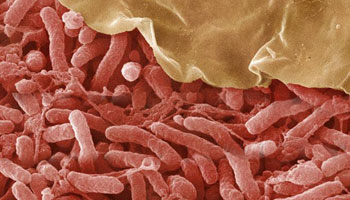
 Rhizobium bacteria
Rhizobium is a genus of Gram–negative soil bacteria that fix nitrogen.
Rhizobium forms an endosymbiotic nitrogen fixing association with roots of legumes and parasponia.
Rhizobium bacteria
Rhizobium is a genus of Gram–negative soil bacteria that fix nitrogen.
Rhizobium forms an endosymbiotic nitrogen fixing association with roots of legumes and parasponia. The bacteria colonize plant cells within root nodules, here the bacteria convert atmospheric nitrogen to ammonia and then provide organic nitrogenous compounds such as glutamine or ureides to the plant. The plant provides the bacteria with organic compounds made by photosynthesis.
Molecular nitrogen is modified via the discharge of lightning. The tremendous energy released by the electrical discharges in our atmosphere breaks the strong bonds between nitrogen atoms, causing them to react with oxygen. Note in this process, nitrogen is oxidized and oxygen is reduced.

The nitrous oxide formed combines with oxygen to form nitrogen dioxide.
2NO + O2  2NO2
2NO2
Nitrogen dioxide readily dissolves in water to produce nitric and nitrous acids.
2NO2+ H2O HNO3 + HNO2
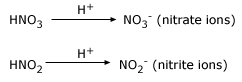
These acids readily release the hydrogen forming nitrate and nitrite ions, which can be readily utilized by plants and micro–organisms.
Denitrifying bacteria, act on ammonia as well as nitrates produced by death and decay, recycling these compounds as free nitrogen (N2). The nitrogen that is fixed by the processes described above is eventually returned to the atmosphere by this denitrification process, to complete what is commonly referred to as the “nitrogen cycle”.